
Last Updated on May 13, 2026 by Susanna Zuyeva
Kitchen mats curl because of stress placed on the material over time.
Several things trigger this:
- Rolled storage before purchase
- Moisture and heat from cooking
- Foot traffic in one direction
- Poor backing material
- Wrong mat size for the space
When a mat sits rolled up in a box or warehouse, the material develops a memory. It wants to return to its curved shape even after you lay it flat.
Material and Construction Problems
Not all kitchen mats are built the same. Low quality materials curl much faster.
Thin Rubber Backing
Many budget mats use a thin rubber or latex backing. This backing shrinks over time when exposed to heat and moisture. When it shrinks, it pulls the edges of the mat upward.
Foam Core Mats
Anti fatigue mats often have a foam core. Foam compresses unevenly under foot traffic. One side breaks down faster, causing the mat to tilt and curl at the corners.
Poor Stitching at Edges
Some mats have edges that are folded and stitched. If the stitching is too tight, it creates tension along the border. That tension slowly lifts the corners off the floor.
Environmental Factors in Your Kitchen
Your kitchen environment plays a big role in mat behavior.
Heat and Humidity
Kitchens get hot and humid. Steam from cooking and hot water from the sink affect rubber and foam materials. Heat softens the backing and allows it to warp.
Cold Floors
Tile and stone floors stay cold. Cold air causes rubber to contract. The mat expands and contracts at a different rate than the floor underneath. This difference in expansion leads to curling over time.
Spills and Wet Conditions
Water seeps under the mat. When the underside stays wet for a long time, the backing material degrades. Degraded rubber loses its grip and shape, and the edges begin to lift.
How to Fix a Curling Kitchen Mat
You do not always need to replace the mat. Try these practical fixes first.
Use Double Sided Tape
Apply double sided carpet tape under the corners and edges. Press the mat firmly against the floor. This holds the edges flat and prevents further curling.
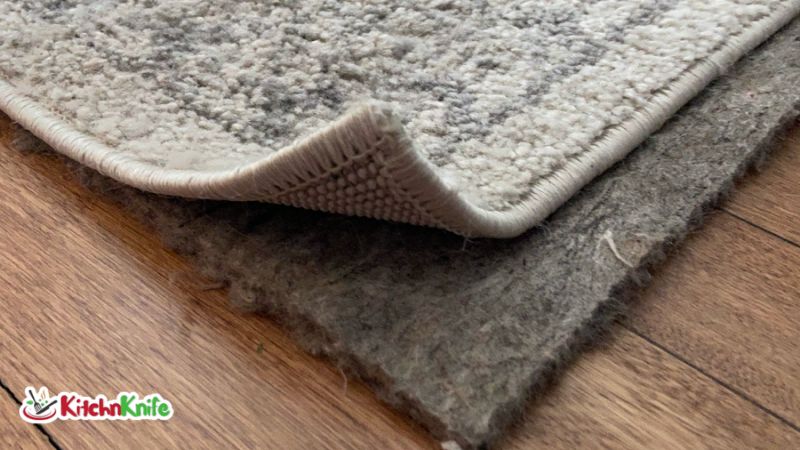
Try a Rug Pad
Place a thin non slip rug pad underneath the kitchen mat. The pad adds grip and keeps the mat pressed flat from below.
Heat and Flatten Method
Lay the mat face down on a hard surface. Place heavy books or furniture on the curled corners. Leave them in place for 24 to 48 hours. The pressure slowly trains the mat to lie flat.
For stubborn curls, use a hairdryer on low heat. Warm the curled area gently while pressing it down. The heat relaxes the material and allows it to flatten.
Reverse Roll the Mat
Roll the mat in the opposite direction of the curl. Secure it with rubber bands or string. Leave it rolled for several hours. This reverses the memory in the material.
How to Prevent Kitchen Mat Curling
Prevention is always easier than fixing the problem later.
Buy Quality Mats
Choose mats with a thick, heavy rubber backing. Look for mats that are labeled as non slip or anti curl. Thicker backing resists shrinkage and warping far better.
Store Mats Flat
Never fold or roll your mat for long periods. Store replacement mats flat under a bed or on a shelf.
Clean and Dry Properly
After cleaning, lay the mat flat to dry. Never hang a rubber backed mat over a rod. The weight causes the edges to curl downward.
Choose the Right Size
A mat that is too large for a space buckles along the walls. A mat that is too small curls because foot traffic pushes it around constantly. Measure your space before buying.
Rotate the Mat Regularly
Foot traffic hits the same spots every day. Rotating the mat every few weeks spreads the wear evenly. This reduces uneven compression and slows down curling.
Final Thoughts
Kitchen mats curl up because of material quality, storage habits, heat, moisture, and daily use.
The good news is that most curling problems are fixable. A rug pad, some carpet tape, or a little heat can restore a flat surface.
If the mat curls again quickly after fixing it, the material is worn out. It is time for a replacement. Look for a mat with a heavy rubber backing and beveled edges for the best long term results.
A flat kitchen mat is safer, easier to clean, and more comfortable to stand on.