
Last Updated on May 13, 2026 by Susanna Zuyeva
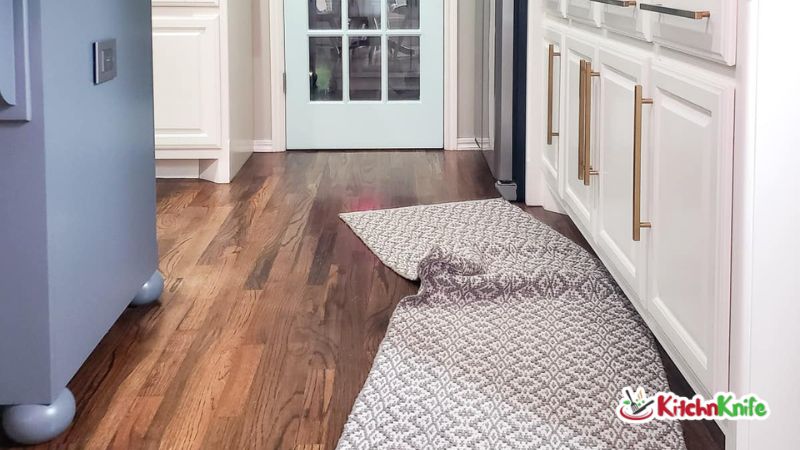
Kitchen mats slide for one simple reason. There is not enough friction between the mat and the floor.
Smooth floors like tile, hardwood, and laminate are the main culprits. Add cooking oil, water, or grease to the mix, and the mat becomes a hazard.
A sliding mat is not just annoying. It is dangerous. Falls in the kitchen are one of the most common home accidents. Fixing this problem is a safety issue, not just a comfort one.
10 Best Methods to Keep Kitchen Mats From Sliding
1. Use a Non-Slip Rug Pad
A non-slip rug pad is the most effective long-term solution. You place it under the mat. It grips both the floor and the mat at the same time.
Look for pads made from natural rubber or felt rubber blends. They work well on tile, hardwood, and vinyl floors. Cut the pad to fit the size of your mat.
Best for: All floor types, all mat sizes.
2. Apply Double-Sided Carpet Tape
Carpet tape sticks to the floor and the mat at the same time. It holds the mat firmly in place.
Use it along the edges and corners of the mat. This is where most sliding starts.
One caution: carpet tape can sometimes leave residue. Test it in a small area first, especially on hardwood floors.
Best for: Tile and laminate floors.
3. Try the Silicone Caulk Method
This is a clever DIY trick. Apply lines of silicone caulk to the back of the mat. Let it dry completely. The dried silicone creates raised, grippy lines that act like a non-slip backing.
Use a clear or white bathroom silicone. This method is cheap, durable, and surprisingly effective.
Best for: Mats with a flat fabric back.
4. Add Velcro Strips
Attach the rough side of Velcro strips to the floor and the soft side to the back of the mat. The two sides lock together and keep the mat in place.
This method works especially well for mats near sinks or stoves where you need to lift and clean frequently. The mat comes off easily when needed.
Best for: Mats that need frequent removal.
5. Use Grip Spray or Anti-Slip Spray
Grip sprays are applied directly to the underside of the mat. They create a tacky, rubberized surface that clings to the floor.
These sprays are affordable and easy to find online or in home improvement stores. Reapply every few months for best results.
Best for: Lightweight mats on smooth floors.
6. Place a Rubber Shelf Liner Underneath
Rubber shelf liners are a budget-friendly alternative to rug pads. Cut a piece to match the mat size and place it underneath.
The open grid design creates friction against the floor. It also lets the floor breathe, which prevents moisture buildup.
Best for: Tile and vinyl floors.
7. Use Corner Grippers or Mat Anchors
Corner grippers are small adhesive tabs that attach to each corner of the mat. They grip the floor and prevent the mat from curling or sliding.
This method works best as a supplement to another method, not on its own for large mats.
Best for: Small mats, entryway-style kitchen runners.
8. Choose Mats With Natural Latex Backing
When buying a new mat, look for one with a natural latex or rubber backing already built in. These mats grip the floor without any extra tools.
Avoid mats with thin plastic or PVC backing. They wear out quickly and often cause more sliding than fabric backed mats.
Best for: New mat purchases.
9. Use Furniture or Appliances to Anchor the Mat
Place a small appliance, trash can, or kitchen stool at one edge of the mat. The weight holds the mat in place naturally.
This works best for longer kitchen runners. Position the mat so it runs under the base of a cabinet or island.
Best for: Kitchen runners and larger mats.
10. Keep the Floor Clean and Dry
Oil, grease, and moisture on the floor reduce friction dramatically. Clean the floor under the mat regularly.
A clean, dry floor gives the mat backing more surface to grip. This simple habit makes every other method work better.
Best for: All situations, as a daily habit.
Tips to Maintain Mat Grip Over Time
Grip solutions do not last forever. Here is how to keep them working longer:
- Wash mats regularly. Dirt and grease build up on the backing and reduce grip.
- Let mats dry fully before placing them back on the floor. A wet backing slides more.
- Replace rug pads every one to two years. They break down over time.
- Reapply grip spray every few months or as needed.
- Check Velcro and tape edges monthly for peeling.
Final Thoughts
A sliding kitchen mat is a simple problem with many easy fixes. The best solution depends on your floor type, mat size, and how often you move the mat.
For a permanent fix, use a non-slip rug pad or a mat with a natural rubber backing. For a quick fix, carpet tape or grip spray works well.
Whatever method you choose, act now. A sliding mat is a fall risk, especially in a busy kitchen. A small fix today can prevent a serious injury tomorrow.